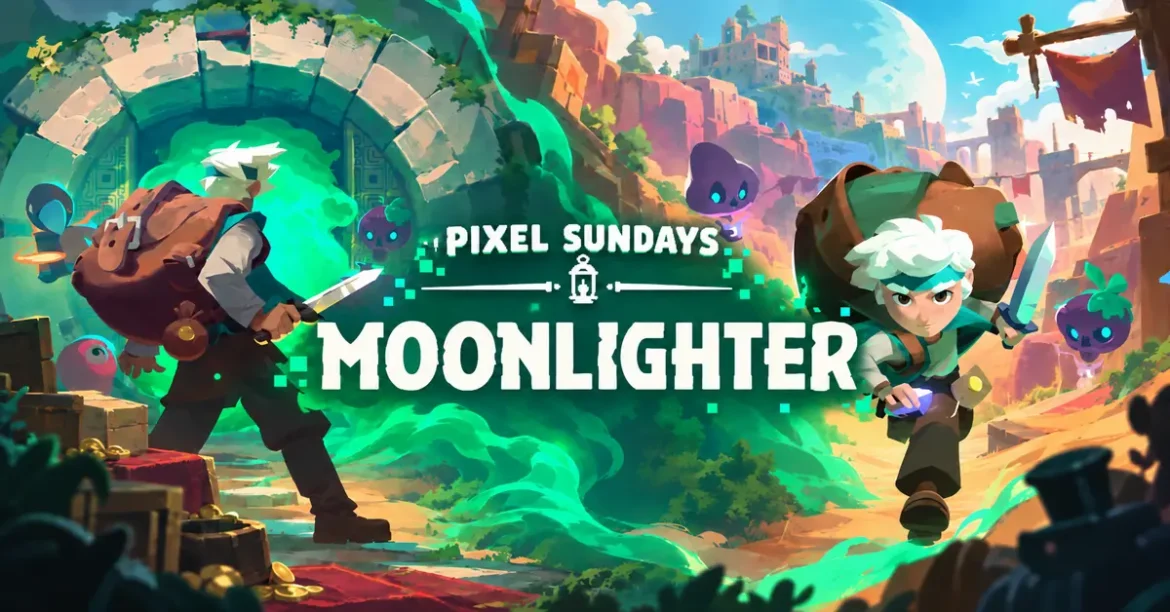
At first glance, Moonlighter appears to be a classic dungeon crawler, but the game already featured a unique twist back in 2018. By night, you fight monsters and gather loot; by day, you sell that exact loot in your own shop. The main character is Will, who serves as both a merchant and an adventurer. The original game was released in 2018 by Digital Sun, a studio that had previously focused primarily on contract work.
Summary
Eight years later, this concept evolved into Moonlighter 2: The Endless Vault, officially turning Moonlighter into a full-fledged franchise. Today, we are discussing the origins of Moonlighter, why this unusual mix of mechanics works so well, and how a pixel-art indie game ultimately transformed into something significantly larger with Moonlighter 2.
Moonlighter Began as a Small Kickstarter Project
The development studio Digital Sun is based in Valencia. While Digital Sun had existed for several years prior to this release, they primarily developed projects for other companies. Moonlighter was the studio’s first original game. Consequently, the title was crucial not only for players but also for Digital Sun, marking their transition from contract developers to an independent game studio.
To fund the game, the studio launched a Kickstarter campaign on May 31, 2016, with a target goal of $40,000. This goal was reached in just two days. By the end of the campaign, $134,276 had been raised from 5,229 backers, more than tripling the initial target. The core concept was already firmly established for the campaign: players would control Will, a shopkeeper who explores roguelite dungeons and then sells the gathered items in his own store.
The game drew inspiration from classic Zelda titles, Rogue Legacy, and The Binding of Isaac. However, Moonlighter aimed to be more than just another roguelite by directly linking the shop management with the dungeon gameplay. Currency is not merely a high score; players sell items to purchase better equipment and grow stronger. This allows for deeper dungeon exploration and the discovery of even more valuable loot.
Why Moonlighter Was More Than Just Another Dungeon Crawler
One could say that in Moonlighter, you are playing two games at once. During the day, it operates as a shop simulator where you display goods, set prices, and monitor customer reactions. At night, you explore dungeons, fight enemies, defeat bosses, and collect relics. Both halves of the game directly influence one another: without the dungeon, there is no shop inventory, and without the shop, there are no funds for better gear.

The shop features its own distinct mechanics. The value of an item is not explicitly displayed; instead, players must gauge customer reactions to determine whether a product is overpriced, underpriced, or priced just right. Additionally, there are shop upgrades, employees, various customer types, and even thieves to manage during a shift. This elevates loot from simple inventory filler to a vital strategic resource.
Will starts as an ordinary shopkeeper harboring dreams of becoming a great adventurer. He lives in the town of Rynoka, a settlement built around mysterious gates leading to other worlds. As players progress through the dungeons, they can invite new merchants and artisans to the village. This introduces another central gameplay loop: as Will grows stronger and his shop expands, the town of Rynoka prospers as well.

Many roguelites focus entirely on the combat runs. Moonlighter, however, gives the gathered loot a concrete purpose between runs. Even a mediocre dungeon run can remain engaging because the recovered items will generate income later. This creates a constant “just one more run before I sell everything” gameplay loop.
From Indie Success to Between Dimensions
The game was released on May 29, 2018, for PC, PS4, and Xbox One, with other platforms following later. The pixel-art style was particularly striking. Through Moonlighter, Digital Sun firmly established itself internationally as an independent studio with its own intellectual properties. Today, the original game continues to hold a “Very Positive” overall user rating on Steam. Following the release, the developers provided quality-of-life improvements, balancing adjustments, new content, and additional challenges.

In 2019, a major paid expansion was released for the game: Between Dimensions. This DLC introduced a new interdimensional dungeon featuring fresh enemies and mini-bosses. It also included new weapon and armor sets, such as Trick Weapons, new rings, and expanded shop inventory options. While the narrative was expanded, the core gameplay loop remained largely the same.
Seven Years Later, Will Returns in Moonlighter 2
In December 2024, Moonlighter 2: The Endless Vault was announced. Developed once again by Digital Sun and published by 11 bit studios, the sequel represents a major milestone. Digital Sun CEO Javier Giménez retrospectively described the first Moonlighter as a defining moment for the studio. During the long hiatus between the first and second installments, the studio developed two other games: one in collaboration with League of Legends, and Cataclismo as an original IP. Years later, Moonlighter 2 showcases the studio’s technical and gameplay advancements.

In Moonlighter 2, Will and his companions find themselves in Tresna, stranded in another dimension. Their objective is to build a new home. Will aims to establish a new shop while searching for a way back to his original dimension. Consequently, his merchant adventure effectively starts over from scratch.
Visually, the game has undergone a significant transformation, shifting away from the classic 2D pixel-art style to a fully three-dimensional world. Moonlighter 2 features much grander animations and effects, making combat feel more dynamic. The updated graphics allow for stronger visual storytelling regarding characters and environments, all while retaining the series’ signature colorful aesthetic.
Moonlighter 2 Expands the Classic Formula into a Larger Game
Moonlighter 1 maintained a relatively traditional top-down perspective within an action-RPG framework, offering various weapon types, dodge rolls, and procedurally generated dungeon rooms. By comparison, the sequel delivers highly dynamic combat gameplay with broader opportunities for diverse builds. This includes stronger synergies and numerous perks, with some relics once again providing unique effects.

In the first game, managing loot placement within the inventory was already an engaging puzzle; items could affect adjacent items or required specific slots. The sequel expands heavily on this mechanic. Relics can now synergize with or even destroy one another to gain more power. Consequently, inventory management has evolved into an even more critical aspect of a dungeon run.
The shop system has also been refined, though managing prices and customer interactions remains essential. Players now have access to deeper shop expansions, decorations, perks, and varying sales strategies. The shop is no longer just a place to offload items between runs; it is meant to feel like a true home. The village of Tresna also plays a more prominent role. Players can invest in other local businesses, unlocking new opportunities and upgrades. As Tresna prospers, Will and his shop benefit in turn.
Conclusion: From Kickstarter Game to an Established Roguelite Franchise
Moonlighter has evolved significantly over the past few years. What began in 2016 as a modest Kickstarter project with a $40,000 goal transformed into Digital Sun’s first major original release two years later. The unique blend of dungeon crawling and shop simulation made Moonlighter stand out in a crowded market. Instead of simply hoarding loot, gathering items became the cornerstone of an addictive loop of exploring, selling, and upgrading.

The Between Dimensions expansion built upon this foundational idea without drastically altering the core concept. Moonlighter 2, however, takes a much bolder leap forward. The transition to 3D graphics, expanded character builds, a highly complex inventory system, and the deeper integration of the shop and the town of Tresna illustrate just how far Digital Sun has come since the original title. Despite these major advancements, the heart of the franchise remains intact: Will ventures into perilous depths, hauls back valuable loot, and uses it to expand his business and uplift his community.
A small Kickstarter game has blossomed into a recognized roguelite franchise. Rather than completely reinventing the original, Moonlighter 2 refines and vastly expands the exact mechanics that made the first game special. Simultaneously, the franchise’s evolution mirrors the growth of Digital Sun itself: rising from a contract work studio to a respected developer with a successfully established brand.
Download the Allkeyshop Browser Extension Free
For all the latest video game news, trailers, and best deals, make sure to bookmark us.
You can find all the best and cheapest online deals on CD keys, game codes, gift cards, and antivirus software from the verified CD key sellers on our store pages.
To not miss any news on Allkeyshop, subscribe on
Google News
.
MORE RELEVANT ARTICLES
PakarPBN
A Private Blog Network (PBN) is a collection of websites that are controlled by a single individual or organization and used primarily to build backlinks to a “money site” in order to influence its ranking in search engines such as Google. The core idea behind a PBN is based on the importance of backlinks in Google’s ranking algorithm. Since Google views backlinks as signals of authority and trust, some website owners attempt to artificially create these signals through a controlled network of sites.
In a typical PBN setup, the owner acquires expired or aged domains that already have existing authority, backlinks, and history. These domains are rebuilt with new content and hosted separately, often using different IP addresses, hosting providers, themes, and ownership details to make them appear unrelated. Within the content published on these sites, links are strategically placed that point to the main website the owner wants to rank higher. By doing this, the owner attempts to pass link equity (also known as “link juice”) from the PBN sites to the target website.
The purpose of a PBN is to give the impression that the target website is naturally earning links from multiple independent sources. If done effectively, this can temporarily improve keyword rankings, increase organic visibility, and drive more traffic from search results.